
Small Business Digital Marketing Strategy Guide
Digital Marketing, Small Business Strategy, Online Presence, SEO Tips
The Ultimate Small Business Guide to Building a Winning Digital Marketing Strategy
If you run a local business, you already juggle a lot: customers, stock, staff, cash flow and a never-ending to‑do list. Adding “Digital Marketing strategy” to that list can feel daunting. The good news is that you do not need a huge budget or a marketing degree to build a powerful online presence. With a clear plan, some smart SEO tips and a bit of consistency, you can attract more of the right customers and keep them coming back.
Why Digital Marketing Matters So Much for Local Businesses
Digital marketing is simply how you promote your business online. For local businesses, it is no longer a nice‑to‑have; it is how people find you, research you and decide whether to choose you over the shop down the road. Your customers are already searching on Google, scrolling through social media and checking reviews before they visit. If your small business strategy does not include a clear online approach, you are quietly handing those customers to your competitors.
The beauty of digital marketing is that it levels the playing field. A small bakery, hairdresser or plumbing service can appear right alongside national brands in search results and social feeds. With a focused strategy and some simple SEO tips, you can punch well above your weight without blowing your budget.
Step 1: Get Clear on Your Goals and Ideal Customers
Before you dive into social media posts or paid ads, pause and ask two simple questions: What do I actually want to achieve? and Who am I trying to reach? A winning small business strategy always starts with clarity, not tactics.
Do you want more foot traffic to your shop?
Are you aiming to increase online bookings or enquiries?
Would you like to sell more through your website or online shop?
Choose one or two main goals first. Then picture your ideal customer in detail: their age, where they live, what problems they are trying to solve and how they usually search for solutions. The clearer this picture, the easier it becomes to choose the right digital channels and messages for your online presence.
💡 Friendly tip: Give your ideal customer a name, like “Busy Brenda” or “DIY Dave”. It sounds silly, but it helps you write more natural, targeted marketing messages.
Step 2: Build a Strong, Simple Online Presence (Start with Your Website)
Think of your website as your digital shopfront. Social media platforms may come and go, but your website is the place you control. It should clearly explain who you are, what you offer, where you are based and how people can contact or book you. You do not need anything flashy; you just need it to be clear, fast and mobile‑friendly.
Include your address, opening hours and phone number on every page, ideally in the footer and on a dedicated contact page.
Make it easy for visitors to take the next step: call, book, get a quote or buy. Use clear buttons and short forms.
Add real photos of your premises, products and team so people feel they know you before they arrive.
A strong online presence also includes your profiles on platforms such as Google Business Profile, Facebook, Instagram or LinkedIn, depending on your audience. Aim for consistency: the same logo, colours, tone of voice and contact details everywhere. That consistency quietly builds trust and makes your small business look professional and reliable.
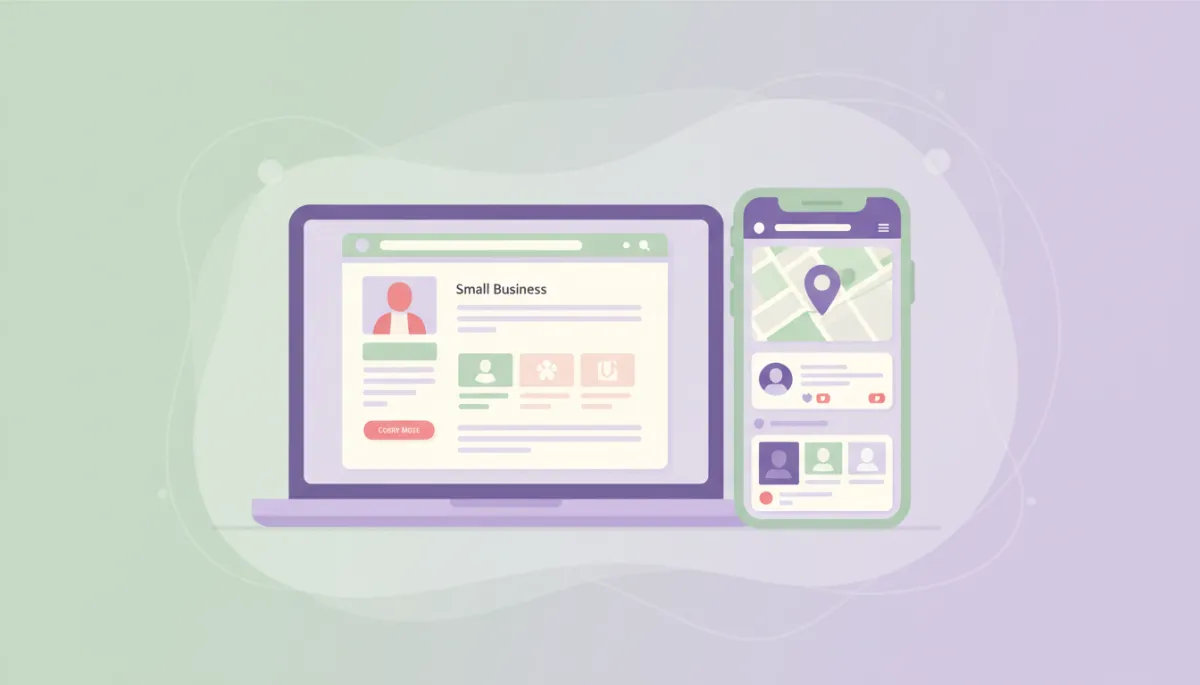
A consistent online presence makes it easier for local customers to recognise and trust you.
Step 3: Master the Basics of Local SEO – Be Found When It Matters
SEO, or search engine optimisation, is how you help Google and other search engines understand your business and show it to the right people. For local businesses, local SEO is your secret weapon. It ensures you appear when someone nearby searches for “café near me”, “emergency plumber in Bristol” or “hairdresser in Leeds”.
Practical Local SEO Tips for Small Businesses
Claim and complete your Google Business Profile. Add your address, phone number, website, opening hours, photos and a short, clear description of what you do. Choose the most accurate category, such as “Italian restaurant” or “Estate agent”.
Use location‑based keywords on your website. Include phrases such as “florist in Manchester” or “solicitor in Brighton” naturally in your page titles, headings and content. This helps search engines connect you with local searches.
Encourage online reviews. Ask happy customers to leave reviews on Google, Facebook or relevant directories. Respond politely to all reviews, even the odd negative one. Reviews are powerful SEO signals and build social proof.
Keep your details consistent. Make sure your business name, address and phone number are written in the same way everywhere online. This consistency helps search engines trust your information.
💡 SEO tip: Do not stuff your pages with repeated keywords. Write naturally for humans first, then gently weave in phrases people might search for.
Step 4: Choose the Right Digital Marketing Channels (Without Overwhelming Yourself)
One of the biggest mistakes small businesses make is trying to be everywhere at once: every social network, every new platform, every trend. That is a fast route to burnout. A smarter small business strategy is to choose a handful of channels that match your ideal customers and do them well. Quality beats quantity every time.
Common Channels for Local Businesses
Search (Google and Bing). Organic SEO and paid search ads help you appear when people are actively looking for what you offer. This is often one of the highest‑intent channels for local businesses.
Social media. Platforms like Facebook, Instagram and TikTok are great for visual businesses such as cafés, salons and shops. LinkedIn can be powerful for B2B services, like accountants or consultants targeting local businesses.
Email marketing. A simple monthly newsletter keeps you in touch with customers, promotes offers and shares helpful tips. It is one of the most cost‑effective digital marketing tools around.
Start with two or three channels that feel manageable and relevant. For example, a local yoga studio might focus on Instagram, Google Business Profile and email. A tradesperson might prioritise local SEO, Google reviews and Facebook. You can always add more later once your foundations are strong.
Step 5: Create Helpful, Human Content that Builds Trust
At the heart of effective digital marketing is content: the words, images and videos you share online. The aim is not just to shout about your offers, but to help people. When you answer common questions, share useful advice and show your expertise, you build trust long before someone becomes a customer.
A hairdresser could post “before and after” photos, styling tips and short videos on how to care for different hair types between appointments.
A local accountant might publish blog posts on “What expenses can I claim as a sole trader?” or “Simple tax deadlines for small businesses”.
A café could share daily specials, behind‑the‑scenes photos and stories about local suppliers.
Content like this does double duty: it makes your online presence more engaging, and it gives search engines more helpful material to index, which can improve your SEO over time. Try to keep your tone friendly and conversational, just as you would when talking to a customer in person.
💡 Friendly tip: Keep a running list of questions customers ask you in person. Each question can become a social post, a short blog or a video idea.
Step 6: Use Simple Analytics to See What Is Working
One of the biggest advantages of digital marketing over traditional methods is that you can see what is working. You do not need to be a data expert; just keep an eye on a few key numbers to guide your small business strategy and avoid wasting time or money.
Website analytics. Free tools such as Google Analytics or your website builder’s dashboard show you how many people visit your site, which pages they view and how they found you. Look for trends rather than obsessing over daily changes.
Search performance. Google Search Console can show you which search terms bring people to your site. This is incredibly useful for refining your SEO and content ideas.
Social media insights. Most social platforms show basic stats such as reach, likes, comments and clicks. Use these to spot which posts resonate and create more in a similar style.
Every month, spend half an hour reviewing your numbers and asking simple questions: Which channels brought the most enquiries? Which posts or pages performed best? What can I do more of, and what can I gently drop? This light‑touch approach keeps your digital marketing grounded in reality, not guesswork.
Step 7: Set a Realistic Routine You Can Actually Stick To
Consistency beats bursts of enthusiasm. It is far better to post once or twice a week, every week, than to post daily for a fortnight and then disappear. Your digital marketing strategy should fit around your real life, not the other way round. Otherwise, it will quickly slide down the priority list when things get busy.
Block out a regular slot in your diary (for example, Monday mornings) to plan and schedule content for the week ahead.
Use simple scheduling tools or built‑in features on Facebook and Instagram to line up posts in advance, so you are not glued to your phone.
Reuse content across channels: a blog post can become several social posts, an email newsletter and even a short video script.
💡 Friendly tip: Aim for progress, not perfection. A simple, honest post is better than waiting weeks for the “perfect” photo or wording.
Bringing It All Together: Your Simple Digital Marketing Blueprint
By now, you can see that a winning digital marketing strategy is not about fancy jargon or massive budgets. It is about knowing your customers, showing up consistently and making it easy for people to find and trust you online. To recap, here is a straightforward blueprint you can adapt for your own small business strategy:
Define one or two clear goals (more bookings, more shop visits, more calls).
Describe your ideal customer and how they search for businesses like yours.
Polish your website so it is clear, mobile‑friendly and action‑oriented.
Strengthen your online presence with accurate listings and consistent branding across key platforms.
Apply core SEO tips: optimise for local searches, encourage reviews and keep your information up to date.
Pick two or three digital marketing channels to focus on and create genuinely helpful content for your audience.
Review your results monthly, adjust your efforts and keep going.
Final Thoughts: You Do Not Have to Do Everything at Once
It is easy to feel overwhelmed by all the advice out there on digital marketing. New platforms launch, algorithms change and trends appear every week. The key is to remember that you do not need to do everything. You just need to do the right things for your business, consistently, with your customers in mind.
Start small. Perhaps this month you focus on tidying up your website and claiming your Google Business Profile. Next month, you might introduce a simple email newsletter or begin posting regularly on one social channel. Step by step, you will build an online presence that reflects the care and effort you already put into your business in real life.
Remember, your digital marketing strategy is not set in stone. It is a living plan that grows with your business. As you learn what works, you can refine your SEO tips, test new formats and explore additional channels. The most important thing is to stay curious, stay friendly and keep your customers at the heart of every decision you make online.
With a clear small business strategy, a thoughtful online presence and a handful of practical digital marketing habits, you will be well on your way to turning casual clicks into loyal, local customers who come back time and again – and recommend you to others. That is the real power of a winning digital marketing strategy for small businesses like yours.
📌 Ready for some extra support? If you would like expert help to execute, advise and guide your small business towards manageable, simple growth, book a call with On‑Pulse today. We are here to turn this blueprint into a practical, sustainable plan tailored to you.
